
驶向共享的未来:高铁时代的文化传播新范式
编者按:从百年前积贫积弱、铁路建设仰仗外国的落后境地,到如今成为高铁运营里程世界第一的“高铁强国”,中国的铁路事业在百年间实现了沧桑巨变。作为国家实力的象征,高铁的文化传播价值早已超越了交通工具本身。当德国男孩Erwin带着对中国高铁的好奇来到中国,我们看到文化传播的范式正悄然从展示独特性迈向以“共享未来”为指向的新维度。当他坐上从北京开往大同的“复兴号”列车时,列车驶过的不仅是一条交通线路,更是一条连接中西的文化交流新路径。这条路以先进科技为基石,逐渐构筑起一种多元互动、平等开放的全球对话新模式。
在对外经贸大学的校史博物馆里,我们见到了Erwin。“大家好,我是Erwin Philipp Händel,今年10岁。”略带害羞地自我介绍后,Erwin告诉我们这是他第二次来到中国。在上次的中国之行中他去了苏州、杭州和上海,而这次,他将在北京和大同开展为期一周的旅行。
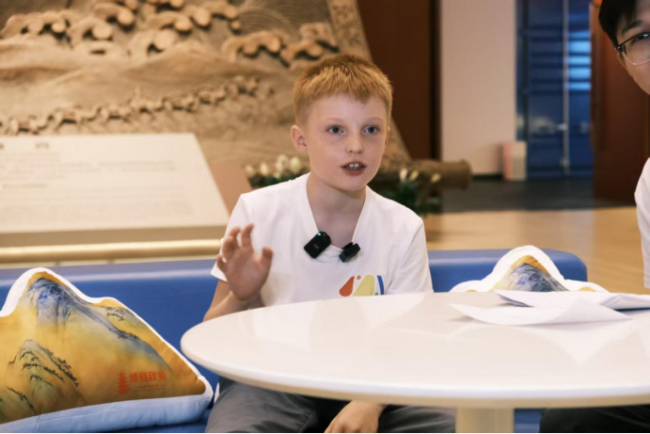
图为Erwin接受采访现场
我们问Erwin:“这次中国之行你有什么期待的行程吗?”“当然!我非常想坐一次中国的高铁!”Erwin回答道。提到高铁,他眼中的羞涩逐渐被兴奋取代。Erwin说,在来中国前他就已经研究过高铁路线图。透过那些纵横交错的轨道,他仿佛已经提前看见了这个国家的辽阔与生机。
被问到为什么对高铁之行如此期待时,Erwin说:“我在TikTok上看到过‘复兴号’高速行驶的样子,那真的很酷!所以我特别想感受一下‘中国速度’。”Erwin边说边在电子地图上标出了两天后即将经过的路线:“当我这样做的时候,我会关注铁路周围的风景与有趣的事物。过几天我们会经过张家口,这里有草原和山地。而在终点站大同,有云冈石窟和好吃的面食。我相信我会在这段旅行中收获很多。”对Erwin来说,这不仅仅是一段交通旅程,更像是一场穿梭于风景与人文之间的沉浸式探险。
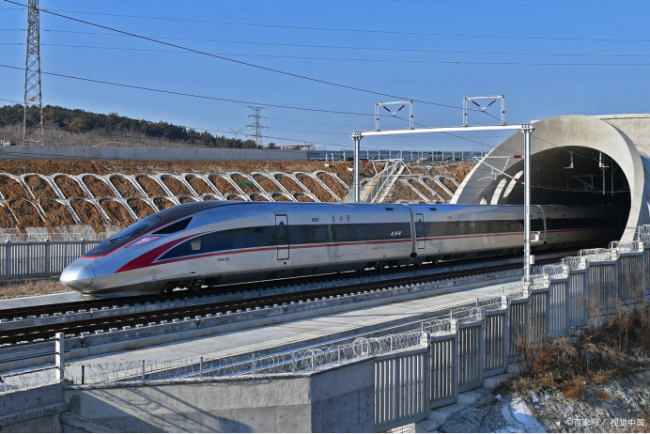
图为“复兴号”列车
Erwin的故事折射出中国对外传播方式的深刻变革。作为现代工业文明的结晶,高铁代表的效率、创新、可持续发展等理念具有全球共识性。当各国青少年通过中国高铁来认识中国时,他们实际上是在共享一套关于现代性和未来发展的价值语言。这种共享的价值认知,为不同文明之间的对话提供了共同基础。
在全球化深入发展的今天,越来越多像Erwin一样的海外青少年,正通过高铁这类代表中国现代科技成就的产品,建立起对当代中国的认知。这种传播方式跳过了传统文化符号的转译环节,使受众能够越过文化隔阂感知当代中国的发展活力与创新精神。

图为Erwin在中国印象·沙龙活动现场
高铁作为新的文化载体,不再刻意强调文化差异,而是凸显人类对效率、安全、舒适等共同价值的追求。这种转变让中国文化的传播实现了从“特色展示”到“价值共享”的升华。传播行为也因此不再是单向的展示,而成为基于现代性体验的对话与交流。同时,高铁不仅仅是交通工具,更是一种“全球公共产品”的象征。它的普及传递出一个信号:中国愿意与世界分享发展成果。这种共享逻辑,本身就是一种最具说服力的文化叙事。
值得注意的是,年轻一代天生对科技抱有亲近感,而高铁作为现代科技产品,正契合了这一认知心理。对中国而言,这种新型的文化传播方式能够规避传统文化传播中可能存在的刻板印象和审美隔阂,直接与全球年轻一代建立连接。在这个过程中,中国得以展示其作为现代性创新者和全球性问题解决者的新形象,推动文化传播从“讲述我是谁”到“展示我能为我们共同的未来做什么”的深刻转变。这种由个体好奇出发的体验,通过社交平台被二次放大,形成新的传播链条。这意味着中国文化的国际传播,正在进入一个以青年为核心节点的网络化时代。
中国高铁的全球传播,映照出科技时代文化传播的新范式:它既尊重文明的多样性,又着眼于人类共同的发展需求。作为现代工程技术的集大成者,中国高铁不仅彰显了中国的制造实力,更贡献出解决全球交通问题的可行方案。当各国旅客体验着高铁的便捷舒适,当地区因高铁焕发出新的经济活力,这些实实在在的效益自然成为最具说服力的文化传播语言。

图为Erwin在中国印象·沙龙活动现场
铁轨将城市与乡村相连,也连接着过去与未来、中国与世界。当Erwin这样的10后透过高铁认识中国时,他们看到的不再只是一个停留在历史中的文明古国,而是一个与他们同样面向未来的现代国家。这种基于科技共鸣的文化理解,为跨文化交流注入了新的活力。未来中国的文化传播,将在延续独特文化魅力的同时,更加注重以智慧和创新回应世界性议题,通过创造共享价值,真正实现从“文化展示”到“未来共建”的跨越。
撰稿人:何博媛
Journeying Towards a Shared Future: A New Paradigm for Cultural Communication in the High-Speed Rail Era
Editor's Note: China's railway system has undergone a monumental transformation over the last century. From a struggling nation dependent on foreign expertise for its railway construction, China has become a "high-speed rail powerhouse" with the world's longest operating high-speed rail network. As a symbol of national strength, high-speed rail's cultural value extends far beyond its function as a mode of transport. The story of Erwin, a young German boy whose curiosity about China's high-speed rail brought him to the country, illustrates a new paradigm of cultural communication, shifting from simply showcasing uniqueness to focusing on a "shared future." When he boarded the Fuxing train from Beijing to Datong, the train wasn't just traversing a route; it was forging a new path for cultural exchange between China and the West. Built on advanced technology, this pathway is gradually fostering a new model of global dialogue—one that is interactive, diverse, and open.
We met Erwin at the University of International Business and Economics (UIBE) History Museum. "Hi everyone, my name is Erwin Philipp Händel, and I'm 10 years old," he said with a hint of shyness. Erwin told us this was his second trip to China. On his previous visit, he went to Suzhou, Hangzhou, and Shanghai. This time, he would spend a week in Beijing and Datong.
We asked Erwin about his expectations for this trip. "Of course! I really want to ride on a Chinese high-speed train!" he replied. As he spoke about high-speed rail, the shyness in his eyes was replaced with excitement. Erwin said that he had already studied the high-speed rail map before coming to China. Through the intricate web of tracks, he felt he had already seen the country's vastness and vitality.
When asked why he was so excited about the high-speed rail journey, Erwin explained, "I saw how fast the Fuxing trains go on TikTok—it's so cool! That's why I really want to experience the 'China speed' for myself." As he spoke, Erwin pointed to the route he would be taking in two days on a digital map. "When I do this, I pay attention to the scenery and interesting things around the railway. In a few days, we'll pass through Zhangjiakou, where there are grasslands and mountains. And at the final stop in Datong, there are the Yungang Grottoes and delicious noodles. I'm sure I'll gain a lot from this trip." For Erwin, this wasn't just a commute; it was an immersive adventure through landscapes and culture.
Erwin's story reflects a profound transformation in China's approach to global communication. As a product of modern industrial civilization, the high-speed train embodies universally accepted concepts such as efficiency, innovation, and sustainable development. When young people from other countries learn about China through high-speed rail, they are effectively sharing a common language of modernity and future development. This shared understanding provides a foundation for dialogue between different civilizations.
In today's deeply globalized world, more and more young people from abroad, like Erwin, are forming their perception of contemporary China through products that represent its modern technological achievements, such as high-speed trains. This form of communication bypasses the need to translate traditional cultural symbols, allowing the audience to directly perceive the vitality and innovative spirit of modern China, free from cultural barriers.
As a new cultural medium, high-speed rail no longer deliberately emphasizes cultural differences but rather highlights the shared human pursuit of efficiency, safety, and comfort. This shift has elevated the communication of Chinese culture from merely "showcasing features" to "sharing values." Communication is no longer a one-way display but a dialogue and exchange based on shared modern experiences. Furthermore, the high-speed rail is more than just a mode of transport; it symbolizes a "global public good." Its widespread use sends a signal that China is willing to share the fruits of its development with the world. This spirit of sharing is, in itself, a powerful cultural narrative.
It's worth noting that the younger generation has a natural affinity for technology, and the high-speed train, as a modern technological product, fits this cognitive preference perfectly. For China, this new method of cultural communication helps bypass the stereotypes and aesthetic divides that can exist in traditional cultural exchanges, establishing a direct connection with young people around the world. In this process, China is able to present a new image as an innovator of modernity and a problem-solver for global issues, promoting a profound shift in cultural communication from "telling the world who I am" to "showing what I can do for our shared future." Experiences born of individual curiosity are amplified through social media, creating new chains of communication. This means that the international communication of Chinese culture is entering a networked era with youth as its central node.
The global spread of China's high-speed rail reflects a new paradigm for cultural communication in the technological age: it respects the diversity of civilizations while focusing on common human development needs. As the culmination of modern engineering technology, China's high-speed rail not only demonstrates the country's manufacturing prowess but also offers a viable solution to global transportation issues. When travelers from different countries experience the convenience and comfort of high-speed rail, and when regions are revitalized by its new economic vitality, these tangible benefits naturally become the most convincing language for cultural communication.
High-speed rail tracks connect cities and villages, and also the past and the future, China and the world. When young people like Erwin, born in the 2010s, learn about China through its high-speed rail, they see not just an ancient civilization steeped in history, but a modern nation that, like them, is oriented toward the future. This cultural understanding, based on a technological resonance, injects new vitality into cross-cultural exchange. In the future, while continuing to highlight its unique cultural charm, China's cultural communication will focus more on using wisdom and innovation to address global issues, and by creating shared values, truly achieve the leap from "cultural display" to "co-building a shared future."
